


Understanding the brain—and what it means to be human
Neuroscience at Wake Forest brings together biology, psychology, and the humanities to explore how the brain shapes behavior, thought, and experience. Students gain a strong scientific foundation while engaging with the ethical, social, and human dimensions of brain science.
Why Neuroscience at Wake Forest?
An interdisciplinary foundation
Neuroscience is studied across disciplines, integrating biological, psychological, and humanistic perspectives.
Hands-on research & inquiry
Students gain experience with research design, data analysis, and scientific literature through coursework, seminars, and faculty-mentored research.
Flexible pathways
Students can pursue neuroscience as a major, complement another field through the minor, or accelerate their studies through a five-year master’s program.
Programs in Neuroscience
Three pathways. One strong foundation.
B.S. in Neuroscience
Designed for students interested in neuroscience research, medicine, and other natural science–related careers, the B.S. emphasizes scientific training, quantitative skills, and research experience.
B.A. in Neuroscience
Designed for students seeking a broader interdisciplinary experience, the B.A. integrates neuroscience with the humanities and social sciences, preparing students for careers in teaching, counseling, advocacy, law, ethics, business, and related fields.
Five-Year M.S. in Neuroscience (4+1 Program)
Highly motivated undergraduates may pursue a research-focused master’s degree in neuroscience with one additional year of study.
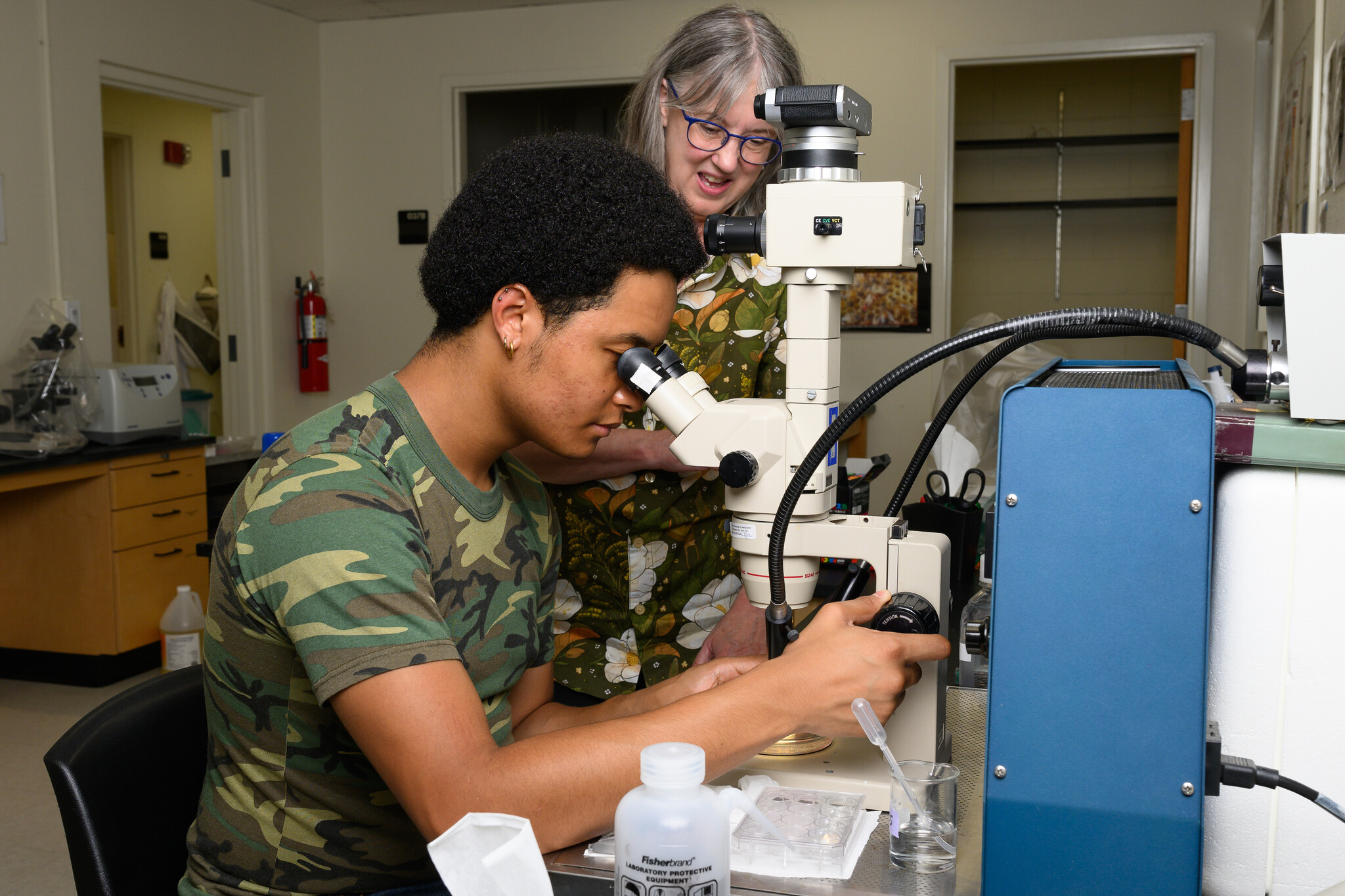
Learn by Doing
Across all neuroscience programs, students actively engage with the field through:
- Research methods and laboratory experiences
- Seminar-based discussion of current neuroscience topics
- Faculty-mentored research projects
- Interdisciplinary coursework linking brain science and human experience
Preparing for What’s Next
Graduates of the neuroscience major pursue careers and advanced study in:
- Research and graduate education
- Medicine and other health professions
- Teaching, counseling, and advocacy
- Law, policy, ethics, and business
The program emphasizes critical thinking, ethical reasoning, and intellectual flexibility.